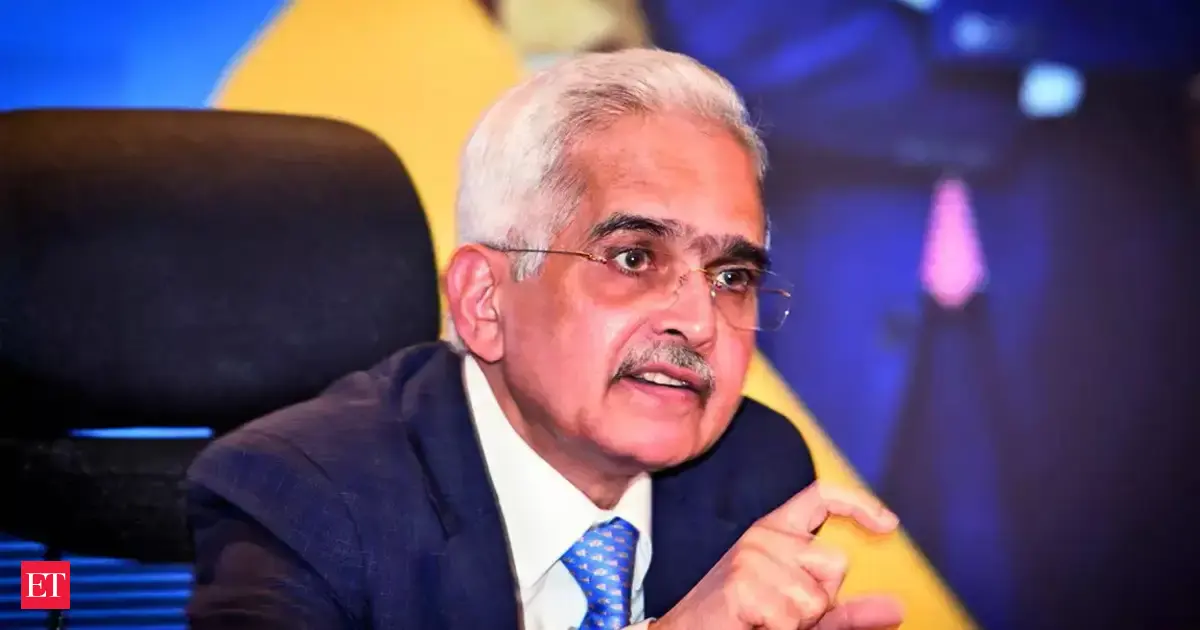
Stability, reforms aid India's rise: Former RBI governor Shaktikanta Das
March 01, 2026
India's economic strength stems from stable policies and reforms. The nation is poised for significant growth, contrasting with global challenges. With a young workforce and digital advancements, India is set to influence global economic trends. This progress is a result of strategic government and RBI actions, aiming for developed economy status by 2047.
Synopsis
India's economic strength stems from stable policies and reforms. The nation is poised for significant growth, contrasting with global challenges. With a young workforce and digital advancements, India is set to influence global economic trends. This progress is a result of strategic government and RBI actions, aiming for developed economy status by 2047.
New Delhi: India's evolution into a "credible" economic power is rooted in macroeconomic stability, institutional reforms and stronger balance sheets across banks and corporates, former Reserve Bank of India (RBI) governor Shaktikanta Das and principal secretary 2 to the Prime Minister said on Saturday.
"This has not happened by chance; it is indeed the result of surgically precise interventions by the government and the RBI," he said at an event in Mumbai, adding that the 'Viksit Bharat' goal of 2047 makes it imperative that "we run a marathon and a sprint simultaneously maintaining macroeconomic and financial sector stability, while expanding new frontiers of growth".
He said the country's growth trajectory stands in sharp contrast to an increasingly fragile global backdrop marked by geopolitical fragmentation, supply-chain shifts and elevated public debt in advanced economies.
"In the post-pandemic period, nearly one-sixth of global real GDP (gross domestic product) growth has come from India," Das said, citing the fragile global situation highlighted by the International Monetary Fund.
The Indian economy is projected to expand 7.6% in 2025-26, according to official estimates, after growing 7.1% in 2024-25. Average real GDP growth in the five years since the pandemic stands at 7.8%, he pointed out.
Live Events
He said "calibrated" fiscal and monetary support during the Covid-19 shock was rolled back in time to ensure "undesirable cholesterol was not built up" in the country's economic and financial systems.
Das outlined nine pillars underpinning India's credibility push toward becoming a developed economy by 2047, including structural reforms such as the goods and services tax, the Insolvency and Bankruptcy Code and flexible inflation targeting. The operationalisation of four labour codes in late 2025, he said, signals continued reform momentum.
He said that the production-linked incentives and industrial policy triggered a resurgence in manufacturing, particularly in electronics, pharmaceuticals, automobiles and defence while services exports and global capability centres deepened the country's integration into global value chains.
Das said the banking system, once saddled with stressed assets, has staged a turnaround, with gross non-performing assets falling to multi-year lows and capital buffers strengthening. Corporate leverage has declined and household balance sheets remain comparatively healthy, he said.
Digital public infrastructure, including the Unified Payments Interface, has accelerated financial inclusion and positioned the country as a leader in real-time payments, while renewable energy capacity has expanded rapidly as the country moves toward its climate goals, he said.
As advanced economies contend with ageing populations and fiscal strain, the country's young workforce, expanding digital ecosystem and improving macroeconomic fundamentals have reinforced investor confidence, he said.
"The coming decade will not be one where India simply participates in global growth," Das said. "It will be one where India helps shape it."
(You can now subscribe to our Economic Times WhatsApp channel)
Why India’s steel ambitions are running into a scrap shortage
A tale of two events: How IndiGo-Air India power balance changed in 6 months
Why the toughest AI challenge lies in Indian IT’s organizational silos
The dollar is still king, and its fate rests in America’s hands
Meesho and Valmo’s growth sprint: Can scale deliver durable advantage?
Stock picks of the week: 5 stocks with consistent score improvement and upside potential of up to 36%
1
2
3
India's economic strength stems from stable policies and reforms. The nation is poised for significant growth, contrasting with global challenges. With a young workforce and digital advancements, India is set to influence global economic trends. This progress is a result of strategic government and RBI actions, aiming for developed economy status by 2047.
New Delhi: India's evolution into a "credible" economic power is rooted in macroeconomic stability, institutional reforms and stronger balance sheets across banks and corporates, former Reserve Bank of India (RBI) governor Shaktikanta Das and principal secretary 2 to the Prime Minister said on Saturday.
"This has not happened by chance; it is indeed the result of surgically precise interventions by the government and the RBI," he said at an event in Mumbai, adding that the 'Viksit Bharat' goal of 2047 makes it imperative that "we run a marathon and a sprint simultaneously maintaining macroeconomic and financial sector stability, while expanding new frontiers of growth".
He said the country's growth trajectory stands in sharp contrast to an increasingly fragile global backdrop marked by geopolitical fragmentation, supply-chain shifts and elevated public debt in advanced economies.
"In the post-pandemic period, nearly one-sixth of global real GDP (gross domestic product) growth has come from India," Das said, citing the fragile global situation highlighted by the International Monetary Fund.
The Indian economy is projected to expand 7.6% in 2025-26, according to official estimates, after growing 7.1% in 2024-25. Average real GDP growth in the five years since the pandemic stands at 7.8%, he pointed out.
Live Events
He said "calibrated" fiscal and monetary support during the Covid-19 shock was rolled back in time to ensure "undesirable cholesterol was not built up" in the country's economic and financial systems.
Das outlined nine pillars underpinning India's credibility push toward becoming a developed economy by 2047, including structural reforms such as the goods and services tax, the Insolvency and Bankruptcy Code and flexible inflation targeting. The operationalisation of four labour codes in late 2025, he said, signals continued reform momentum.
He said that the production-linked incentives and industrial policy triggered a resurgence in manufacturing, particularly in electronics, pharmaceuticals, automobiles and defence while services exports and global capability centres deepened the country's integration into global value chains.
Das said the banking system, once saddled with stressed assets, has staged a turnaround, with gross non-performing assets falling to multi-year lows and capital buffers strengthening. Corporate leverage has declined and household balance sheets remain comparatively healthy, he said.
Digital public infrastructure, including the Unified Payments Interface, has accelerated financial inclusion and positioned the country as a leader in real-time payments, while renewable energy capacity has expanded rapidly as the country moves toward its climate goals, he said.
As advanced economies contend with ageing populations and fiscal strain, the country's young workforce, expanding digital ecosystem and improving macroeconomic fundamentals have reinforced investor confidence, he said.
"The coming decade will not be one where India simply participates in global growth," Das said. "It will be one where India helps shape it."
(You can now subscribe to our Economic Times WhatsApp channel)
Why India’s steel ambitions are running into a scrap shortage
A tale of two events: How IndiGo-Air India power balance changed in 6 months
Why the toughest AI challenge lies in Indian IT’s organizational silos
The dollar is still king, and its fate rests in America’s hands
Meesho and Valmo’s growth sprint: Can scale deliver durable advantage?
Stock picks of the week: 5 stocks with consistent score improvement and upside potential of up to 36%
1
2
3