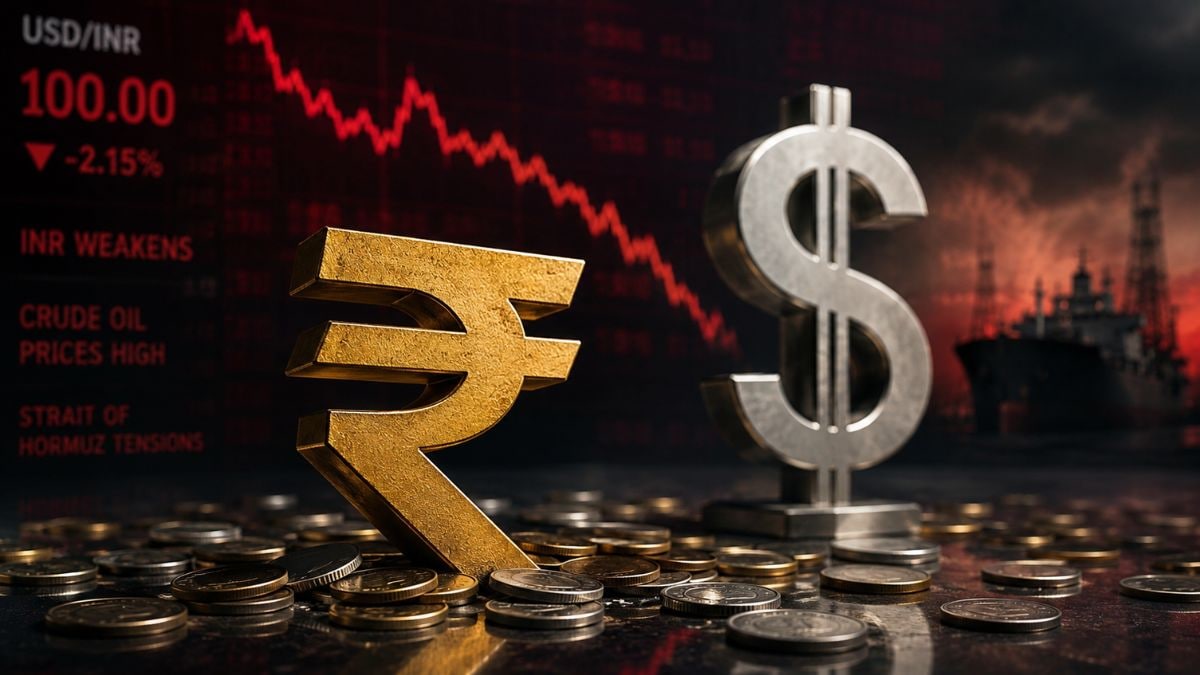
Rupee at 100, repo rate at 6.75%? MUFG predicts worst-case scenario for India
May 27, 2026
MUFG Bank warns the Indian rupee could weaken to 100 against the US dollar if Strait of Hormuz tensions escalate further. The brokerage also expects RBI rate hikes and rising inflation risks due to elevated crude oil prices and weak capital inflows- Know more.
“We continue to view the Indian rupee as vulnerable across a range of scenarios on the Strait of Hormuz, with USD/INR likely moving towards 98.00, and even 100.00 is in sight if the conflict prolongs or escalates,” MUFG said in its report.
The brokerage also warned that India’s retail inflation could breach the RBI’s upper tolerance band of 6% if oil prices remain elevated for a prolonged period, with a weak monsoon and possible Super El Nino conditions adding to food inflation risks.
RBI may hike rates by 50 bps: MUFG
MUFG Bank expects the Reserve Bank of India (RBI) to raise interest rates by at least 50 basis points (bps) in FY27 to support the rupee and manage inflation expectations.
The report expects the repo rate to rise to 5.75%, with rate hikes likely in the upcoming June meeting and next meeting on August.
“We now forecast RBI hiking rates by at least 50bps this fiscal year, bringing the terminal repo rate to 5.75%,” MUFG said.
In severe scenarios, the brokerage sees the terminal repo rate rising further to 6.25%-6.75%.
More measures likely to support rupee
MUFG Bank said the RBI and the government could announce additional measures to stabilise the rupee and manage external pressures.
These may include further domestic fuel price hikes, tighter Liberalised Remittance Scheme (LRS) rules, restrictions on outward investments and foreign currency bond issuances targeting non-resident Indians.
The report noted that authorities have already increased fuel prices, raised gold import duties, restricted silver imports and tightened regulations in the INR NDF market.
“Lower caps on India companies’ Direct Investment outflows, coupled with issuance of foreign currency bonds to tap Non-Resident Indian funds among others are likely to be announced moving forward,” the report said as surging oil prices and a widening current account deficit due to the Middle East conflict are not the only reasons behind the rupee’s depreciation.
Here are key factors impacting the rupee, according to MUFG Bank.
Super El-Nino effect
A weak southwest monsoon, a possible “Super El-Nino”, and uncertainty around higher US bond yields could further intensify pressure on the Indian rupee. “A potential Super El-Nino event this year raises the risk of exacerbating a weak southwest monsoon and eventually pushing up food prices.”
Weak capital inflows
India’s problem of weak foreign inflows predates the Iran conflict and reflects deeper structural shifts in the country’s balance of payments. “This problem of weak capital inflows into India predates the Iran conflict, and is likely to continue even with de-escalation,” the report noted.
Sharp decline in net direct investment
India’s net direct investment flows have fallen from nearly $40 billion to close to zero in recent years, as foreign investors increasingly repatriate profits from existing investments. Portfolio outflows in the first half of 2026 were among the steepest on record, MUFG added.
Rising oil prices and widening current account deficit
Surging crude oil prices linked to the Middle East conflict are compounding the problem, worsening the current account deficit and adding further pressure on the rupee. MUFG warned that prolonged geopolitical tensions and supply disruptions around the Strait of Hormuz could push India’s import bill higher still.
The brokerage also warned that India’s retail inflation could breach the RBI’s upper tolerance band of 6% if oil prices remain elevated for a prolonged period, with a weak monsoon and possible Super El Nino conditions adding to food inflation risks.
RBI may hike rates by 50 bps: MUFG
MUFG Bank expects the Reserve Bank of India (RBI) to raise interest rates by at least 50 basis points (bps) in FY27 to support the rupee and manage inflation expectations.
The report expects the repo rate to rise to 5.75%, with rate hikes likely in the upcoming June meeting and next meeting on August.
“We now forecast RBI hiking rates by at least 50bps this fiscal year, bringing the terminal repo rate to 5.75%,” MUFG said.
In severe scenarios, the brokerage sees the terminal repo rate rising further to 6.25%-6.75%.
More measures likely to support rupee
MUFG Bank said the RBI and the government could announce additional measures to stabilise the rupee and manage external pressures.
These may include further domestic fuel price hikes, tighter Liberalised Remittance Scheme (LRS) rules, restrictions on outward investments and foreign currency bond issuances targeting non-resident Indians.
The report noted that authorities have already increased fuel prices, raised gold import duties, restricted silver imports and tightened regulations in the INR NDF market.
“Lower caps on India companies’ Direct Investment outflows, coupled with issuance of foreign currency bonds to tap Non-Resident Indian funds among others are likely to be announced moving forward,” the report said as surging oil prices and a widening current account deficit due to the Middle East conflict are not the only reasons behind the rupee’s depreciation.
Here are key factors impacting the rupee, according to MUFG Bank.
Super El-Nino effect
A weak southwest monsoon, a possible “Super El-Nino”, and uncertainty around higher US bond yields could further intensify pressure on the Indian rupee. “A potential Super El-Nino event this year raises the risk of exacerbating a weak southwest monsoon and eventually pushing up food prices.”
Weak capital inflows
India’s problem of weak foreign inflows predates the Iran conflict and reflects deeper structural shifts in the country’s balance of payments. “This problem of weak capital inflows into India predates the Iran conflict, and is likely to continue even with de-escalation,” the report noted.
Sharp decline in net direct investment
India’s net direct investment flows have fallen from nearly $40 billion to close to zero in recent years, as foreign investors increasingly repatriate profits from existing investments. Portfolio outflows in the first half of 2026 were among the steepest on record, MUFG added.
Rising oil prices and widening current account deficit
Surging crude oil prices linked to the Middle East conflict are compounding the problem, worsening the current account deficit and adding further pressure on the rupee. MUFG warned that prolonged geopolitical tensions and supply disruptions around the Strait of Hormuz could push India’s import bill higher still.