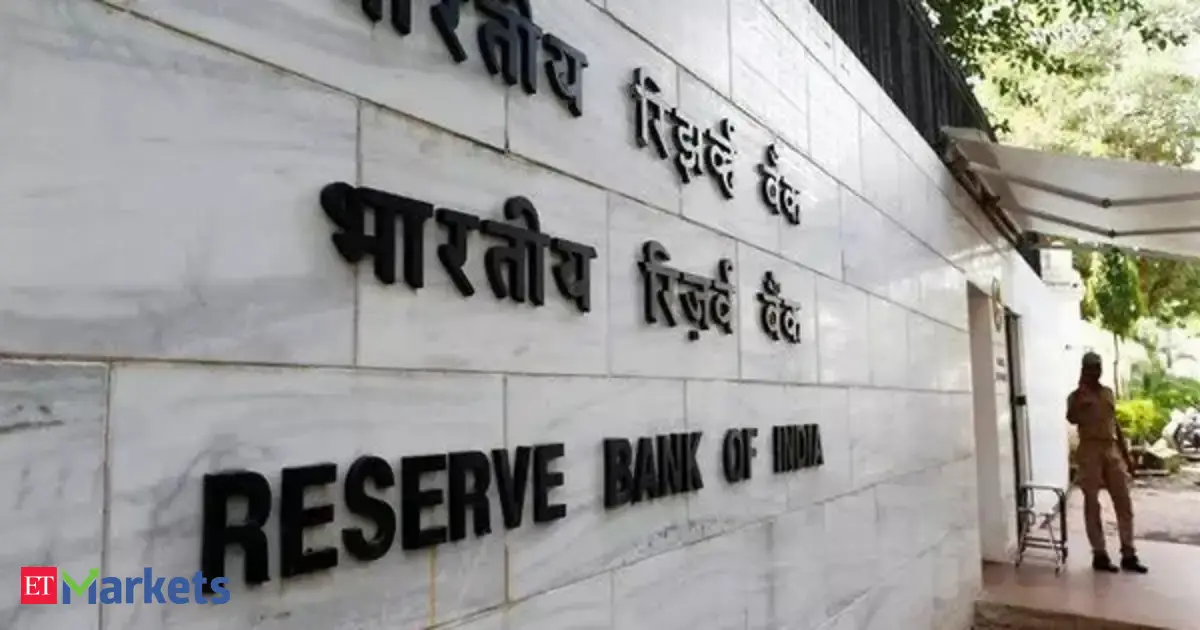
RBI's forex war explained: How a $149 billion crackdown is stopping speculators from tanking the rupee
April 02, 2026
The RBI has tightened forex derivative rules after its initial intervention backfired, allowing arbitrage trades to weaken the rupee further. The new measures aim to curb speculation, stabilise the currency, and close loopholes in the $149 billion NDF market, though they may impact market liquidity over time.
Synopsis
The RBI has tightened forex derivative rules after its initial intervention backfired, allowing arbitrage trades to weaken the rupee further. The new measures aim to curb speculation, stabilise the currency, and close loopholes in the $149 billion NDF market, though they may impact market liquidity over time.
The Indian rupee jumped 1.4% to 93.53 against the US dollar on Thursday as the Reserve Bank of India's sweeping crackdown on currency speculation finally gained traction, but only after the central bank was forced to plug a massive leeway that had allowed its first intervention to backfire.
In a dramatic escalation late Wednesday, the RBI barred banks from offering rupee non-deliverable forwards to any clients and banned the rebooking of cancelled forward contracts, disrupting a $149 billion-a-day market in what analysts call the toughest measures in over a decade.
The moves came after the central bank's initial attempt to stabilise the battered currency, which plunged 4.24% in March to record the worst monthly drop in six years, was systematically undermined by banks and corporates exploiting an arbitrage opportunity the RBI itself had inadvertently created.
How the first crackdown backfired
Earlier this week, the RBI capped banks' net open rupee positions at $100 million, down from board-driven limits of up to 25% of capital, in a surprise Friday evening move aimed at curbing derivative positions and supporting the currency.
Live Events
But as banks cut their positions, corporates exploited arbitrage between the onshore and NDF markets, putting additional pressure on the rupee and negating the impact of the initial measures. The rupee had rallied past 93 in the interbank market on Monday after the initial crackdown, only to slide quickly beyond 95 to an all-time low as the arbitrage trade picked up.
Why the RBI had to act again
"RBI probably wasn't comfortable given the limited INR appreciation," Jefferies analysts said. "As the forex-trade flows were manageable and there was forex buying from importers, INR didn't appreciate much on Monday (first day of trade). It opened 1% higher, but ended flat at Rs 95/USD. This may have been a consideration for the RBI to follow up."
The central bank had expected wider spreads between offshore and onshore forward premiums as banks closed their positions. Jefferies estimates the market had a dollar-rupee open position of $40 billion, and a 1% movement in the spread could have led to losses of around Rs 40 billion for the banking sector.
However, banks were able to transfer or sell part of their positions to corporates, hedge funds and other clients, hoping to mitigate losses to Rs 30-40 billion.
RBI’s new rules
The RBI's Wednesday night measures closed every escape route. Banks can no longer offer non-deliverable derivative contracts involving the rupee to resident or non-resident users, which "can materially impact the size of arbitrage forex-trade volumes and impact system liquidity," according to Jefferies.
They can only offer deliverable contracts after obtaining proof that they are for hedging needs, dramatically increasing compliance requirements.
The rebooking ban eliminates a widely used arbitrage strategy. Previously, if an importer booked a hedge at Rs 96 and the currency strengthened to Rs 94, they could cancel the old contract, take a small loss or gain, and rebook at the better rate. "If clients cancel any contract from hereon, they will need to run with an open position," Jefferies explained.
Banks also cannot make rupee derivative transactions with related parties, including their foreign trading entities, a rule particularly relevant for foreign banks.
"While banks were expecting to minimise their losses, the tighter rules may bring it back to the original estimate or a tad higher (Rs 4,000-5,000 crore), depending on how the spreads move," Jefferies said, revising its estimate upward from the initial Rs 3,000-4,000 crore.
"RBI has further tightened rules on forex derivatives, requiring banks to close contracts in open markets by removing leeway to sell to corporates or clients. This can lead to (1) higher INR appreciation versus flat on Monday, (2) losses for banks being Rs 40-50 billion versus earlier estimates of Rs 30-40 billion," the brokerage wrote.
The losses, equivalent to $470-590 million, remain manageable given the sector's pre-tax profit of Rs 5.5 lakh crore in FY25. Foreign banks may absorb roughly 45% of derivative market losses, private banks 40%, and state-owned banks 15%. Some losses may be booked in the fourth quarter of FY26 and first quarter of FY27.
The aggressive intervention comes as the rupee hit a string of all-time lows on worries over spillovers from the Iran war, which has exacerbated pressure on a currency already struggling with concerns over India's current account and weak capital flows.
The measures are among the toughest in over a decade as the central bank battles to stabilise the currency using tools beyond its traditional arsenal of dollar sales and interest rate adjustments.
"On the back of these rules, banks expect INR to appreciate," Jefferies noted. "Still, we believe that sudden and retrospective changes to rules, while appropriate in the current extreme situation, may affect the depth of INR's forex trading over the medium to long term."
"While loss is manageable, as sector PBT in FY25 was at Rs 5.5 trillion and about 45% of losses may be on unlisted foreign banks, it can also affect medium to long-term trading activity in INR," the brokerage added.
(You can now subscribe to our ETMarkets WhatsApp channel)
(What's moving Sensex and Nifty Track latest market news, stock tips, Budget 2025, Share Market on Budget 2025 and expert advice, on ETMarkets. Also, ETMarkets.com is now on Telegram. For fastest news alerts on financial markets, investment strategies and stocks alerts, subscribe to our Telegram feeds .)
Subscribe to ET Prime and read the Economic Times ePaper Online.and Sensex Today.
Top Trending Stocks: SBI Share Price, Axis Bank Share Price, HDFC Bank Share Price, Infosys Share Price, Wipro Share Price, NTPC Share Price
...moreless
(You can now subscribe to our ETMarkets WhatsApp channel)
(What's moving Sensex and Nifty Track latest market news, stock tips, Budget 2025, Share Market on Budget 2025 and expert advice, on ETMarkets. Also, ETMarkets.com is now on Telegram. For fastest news alerts on financial markets, investment strategies and stocks alerts, subscribe to our Telegram feeds .)
Subscribe to ET Prime and read the Economic Times ePaper Online.and Sensex Today.
Top Trending Stocks: SBI Share Price, Axis Bank Share Price, HDFC Bank Share Price, Infosys Share Price, Wipro Share Price, NTPC Share Price
...moreless
How a cozy club controls India’s gold imports
Trade was just the first casualty; RBI rate cuts may be next in the Iran War fallout
AI puts India’s USD190-billion services trade surplus at a crossroads
As IPO nears, NSE looks to settle long-running predatory pricing case
Beyond biscuits: ‘Forgotten brands’ power Britannia’s rise amid FMCG fall
Buy, Sell or Hold: Morgan Stanley maintains overweight rating on BEL & Jubilant FoodWorks
1
2
3
The RBI has tightened forex derivative rules after its initial intervention backfired, allowing arbitrage trades to weaken the rupee further. The new measures aim to curb speculation, stabilise the currency, and close loopholes in the $149 billion NDF market, though they may impact market liquidity over time.
The Indian rupee jumped 1.4% to 93.53 against the US dollar on Thursday as the Reserve Bank of India's sweeping crackdown on currency speculation finally gained traction, but only after the central bank was forced to plug a massive leeway that had allowed its first intervention to backfire.
In a dramatic escalation late Wednesday, the RBI barred banks from offering rupee non-deliverable forwards to any clients and banned the rebooking of cancelled forward contracts, disrupting a $149 billion-a-day market in what analysts call the toughest measures in over a decade.
The moves came after the central bank's initial attempt to stabilise the battered currency, which plunged 4.24% in March to record the worst monthly drop in six years, was systematically undermined by banks and corporates exploiting an arbitrage opportunity the RBI itself had inadvertently created.
How the first crackdown backfired
Earlier this week, the RBI capped banks' net open rupee positions at $100 million, down from board-driven limits of up to 25% of capital, in a surprise Friday evening move aimed at curbing derivative positions and supporting the currency.
Live Events
But as banks cut their positions, corporates exploited arbitrage between the onshore and NDF markets, putting additional pressure on the rupee and negating the impact of the initial measures. The rupee had rallied past 93 in the interbank market on Monday after the initial crackdown, only to slide quickly beyond 95 to an all-time low as the arbitrage trade picked up.
Why the RBI had to act again
"RBI probably wasn't comfortable given the limited INR appreciation," Jefferies analysts said. "As the forex-trade flows were manageable and there was forex buying from importers, INR didn't appreciate much on Monday (first day of trade). It opened 1% higher, but ended flat at Rs 95/USD. This may have been a consideration for the RBI to follow up."
The central bank had expected wider spreads between offshore and onshore forward premiums as banks closed their positions. Jefferies estimates the market had a dollar-rupee open position of $40 billion, and a 1% movement in the spread could have led to losses of around Rs 40 billion for the banking sector.
However, banks were able to transfer or sell part of their positions to corporates, hedge funds and other clients, hoping to mitigate losses to Rs 30-40 billion.
RBI’s new rules
The RBI's Wednesday night measures closed every escape route. Banks can no longer offer non-deliverable derivative contracts involving the rupee to resident or non-resident users, which "can materially impact the size of arbitrage forex-trade volumes and impact system liquidity," according to Jefferies.
They can only offer deliverable contracts after obtaining proof that they are for hedging needs, dramatically increasing compliance requirements.
The rebooking ban eliminates a widely used arbitrage strategy. Previously, if an importer booked a hedge at Rs 96 and the currency strengthened to Rs 94, they could cancel the old contract, take a small loss or gain, and rebook at the better rate. "If clients cancel any contract from hereon, they will need to run with an open position," Jefferies explained.
Banks also cannot make rupee derivative transactions with related parties, including their foreign trading entities, a rule particularly relevant for foreign banks.
"While banks were expecting to minimise their losses, the tighter rules may bring it back to the original estimate or a tad higher (Rs 4,000-5,000 crore), depending on how the spreads move," Jefferies said, revising its estimate upward from the initial Rs 3,000-4,000 crore.
"RBI has further tightened rules on forex derivatives, requiring banks to close contracts in open markets by removing leeway to sell to corporates or clients. This can lead to (1) higher INR appreciation versus flat on Monday, (2) losses for banks being Rs 40-50 billion versus earlier estimates of Rs 30-40 billion," the brokerage wrote.
The losses, equivalent to $470-590 million, remain manageable given the sector's pre-tax profit of Rs 5.5 lakh crore in FY25. Foreign banks may absorb roughly 45% of derivative market losses, private banks 40%, and state-owned banks 15%. Some losses may be booked in the fourth quarter of FY26 and first quarter of FY27.
The aggressive intervention comes as the rupee hit a string of all-time lows on worries over spillovers from the Iran war, which has exacerbated pressure on a currency already struggling with concerns over India's current account and weak capital flows.
The measures are among the toughest in over a decade as the central bank battles to stabilise the currency using tools beyond its traditional arsenal of dollar sales and interest rate adjustments.
"On the back of these rules, banks expect INR to appreciate," Jefferies noted. "Still, we believe that sudden and retrospective changes to rules, while appropriate in the current extreme situation, may affect the depth of INR's forex trading over the medium to long term."
"While loss is manageable, as sector PBT in FY25 was at Rs 5.5 trillion and about 45% of losses may be on unlisted foreign banks, it can also affect medium to long-term trading activity in INR," the brokerage added.
(You can now subscribe to our ETMarkets WhatsApp channel)
(What's moving Sensex and Nifty Track latest market news, stock tips, Budget 2025, Share Market on Budget 2025 and expert advice, on ETMarkets. Also, ETMarkets.com is now on Telegram. For fastest news alerts on financial markets, investment strategies and stocks alerts, subscribe to our Telegram feeds .)
Subscribe to ET Prime and read the Economic Times ePaper Online.and Sensex Today.
Top Trending Stocks: SBI Share Price, Axis Bank Share Price, HDFC Bank Share Price, Infosys Share Price, Wipro Share Price, NTPC Share Price
...moreless
(You can now subscribe to our ETMarkets WhatsApp channel)
(What's moving Sensex and Nifty Track latest market news, stock tips, Budget 2025, Share Market on Budget 2025 and expert advice, on ETMarkets. Also, ETMarkets.com is now on Telegram. For fastest news alerts on financial markets, investment strategies and stocks alerts, subscribe to our Telegram feeds .)
Subscribe to ET Prime and read the Economic Times ePaper Online.and Sensex Today.
Top Trending Stocks: SBI Share Price, Axis Bank Share Price, HDFC Bank Share Price, Infosys Share Price, Wipro Share Price, NTPC Share Price
...moreless
How a cozy club controls India’s gold imports
Trade was just the first casualty; RBI rate cuts may be next in the Iran War fallout
AI puts India’s USD190-billion services trade surplus at a crossroads
As IPO nears, NSE looks to settle long-running predatory pricing case
Beyond biscuits: ‘Forgotten brands’ power Britannia’s rise amid FMCG fall
Buy, Sell or Hold: Morgan Stanley maintains overweight rating on BEL & Jubilant FoodWorks
1
2
3