RBI should avoid aggressive rate hikes as high crude threatens growth, says Axis AMC’s Devang Shah
May 27, 2026
Devang Shah, Head of Fixed Income at Axis AMC believes sharply tighter financial conditions could hurt growth and worsen economic stress. He expects the central bank to adopt a calibrated approach through gradual rate hikes and measures to attract dollar inflows, while warning that prolonged crude prices above $100 could continue to pressure India’s macroeconomic outlook and the rupee.
Devang Shah, Head of Fixed Income at Axis AMC believes sharply tighter financial conditions could hurt growth and worsen economic stress. He expects the central bank to adopt a calibrated approach through gradual rate hikes and measures to attract dollar inflows, while warning that prolonged crude prices above $100 could continue to pressure India’s macroeconomic outlook and the rupee.
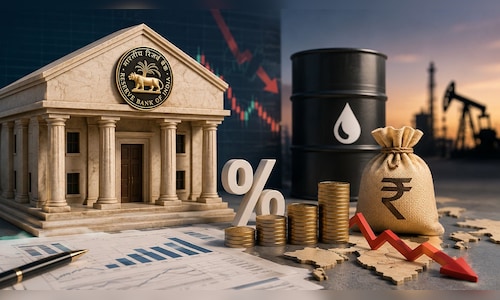
The Reserve Bank of India (RBI) should avoid aggressive interest rate hikes even as high crude oil prices pressure the rupee and inflation, according to Devang Shah, Head of Fixed Income at Axis Asset Management Company.
Shah believes sharply tightening monetary policy could hurt India’s growth momentum and create bigger problems for the economy if financial conditions become too restrictive.
“Rate hike is not the only solution which can actually take care of the entire macro scenario,” Shah said.
According to him, bond markets have already started pricing in rate hikes aggressively because crude oil prices have remained elevated for more than three months. Markets that earlier expected stable interest rates are now factoring in nearly 100 basis points of hikes.
However, Shah argued that India’s macroeconomic position is still stronger than during earlier crises, such as 2013, when the current account deficit (CAD) had crossed 4% of gross domestic product (GDP). Even after the recent oil shock, he expects India’s deficit to remain closer to 2%, which he sees as manageable.
Also Read | RBI unlikely to rush into June rate hike despite inflation risks: Citi’s Samiran Chakraborty
He said the RBI should instead focus on a calibrated policy response that balances inflation control with economic growth.
“If I were in the Monetary Policy Committee (MPC), I would probably use measures like attracting dollar flows as well as calibrated rate hikes over the next six months, and keep the financial conditions easy, so that the impact on growth is minimal,” Shah said.
India’s economy has become more vulnerable because of its dependence on imported crude oil. Shah noted that rising oil prices from around $60 to above $100 have weakened the country’s current account position and added pressure on the rupee.
He estimated that the rupee has already depreciated nearly 15% over the past 15-18 months, with crude volatility accounting for a significant part of that decline.
According to Shah, the biggest risk now is that excessively high interest rates could slow credit growth and weaken domestic demand at a time when India remains one of the fastest-growing major economies.
“If we get into this vicious cycle of higher inflation, lower growth, I think currency depreciation will continue,” he warned.
Watch the full conversation here
Shah added that attracting foreign capital flows and maintaining relatively stronger growth would ultimately be more effective for supporting the rupee than relying only on aggressive rate hikes.
Also Read | Former RBI and SEBI officials debate rate hikes amid rupee pressure
For now, he believes markets will remain closely tied to the direction of crude oil prices and the evolving geopolitical situation.
Catch all the latest updates from the stock market here
The Reserve Bank of India (RBI) should avoid aggressive interest rate hikes even as high crude oil prices pressure the rupee and inflation, according to Devang Shah, Head of Fixed Income at Axis Asset Management Company.
Shah believes sharply tightening monetary policy could hurt India’s growth momentum and create bigger problems for the economy if financial conditions become too restrictive.
“Rate hike is not the only solution which can actually take care of the entire macro scenario,” Shah said.
According to him, bond markets have already started pricing in rate hikes aggressively because crude oil prices have remained elevated for more than three months. Markets that earlier expected stable interest rates are now factoring in nearly 100 basis points of hikes.
However, Shah argued that India’s macroeconomic position is still stronger than during earlier crises, such as 2013, when the current account deficit (CAD) had crossed 4% of gross domestic product (GDP). Even after the recent oil shock, he expects India’s deficit to remain closer to 2%, which he sees as manageable.
Also Read | RBI unlikely to rush into June rate hike despite inflation risks: Citi’s Samiran Chakraborty
He said the RBI should instead focus on a calibrated policy response that balances inflation control with economic growth.
“If I were in the Monetary Policy Committee (MPC), I would probably use measures like attracting dollar flows as well as calibrated rate hikes over the next six months, and keep the financial conditions easy, so that the impact on growth is minimal,” Shah said.
India’s economy has become more vulnerable because of its dependence on imported crude oil. Shah noted that rising oil prices from around $60 to above $100 have weakened the country’s current account position and added pressure on the rupee.
He estimated that the rupee has already depreciated nearly 15% over the past 15-18 months, with crude volatility accounting for a significant part of that decline.
According to Shah, the biggest risk now is that excessively high interest rates could slow credit growth and weaken domestic demand at a time when India remains one of the fastest-growing major economies.
“If we get into this vicious cycle of higher inflation, lower growth, I think currency depreciation will continue,” he warned.
Watch the full conversation here
Shah added that attracting foreign capital flows and maintaining relatively stronger growth would ultimately be more effective for supporting the rupee than relying only on aggressive rate hikes.
Also Read | Former RBI and SEBI officials debate rate hikes amid rupee pressure
For now, he believes markets will remain closely tied to the direction of crude oil prices and the evolving geopolitical situation.
Catch all the latest updates from the stock market here