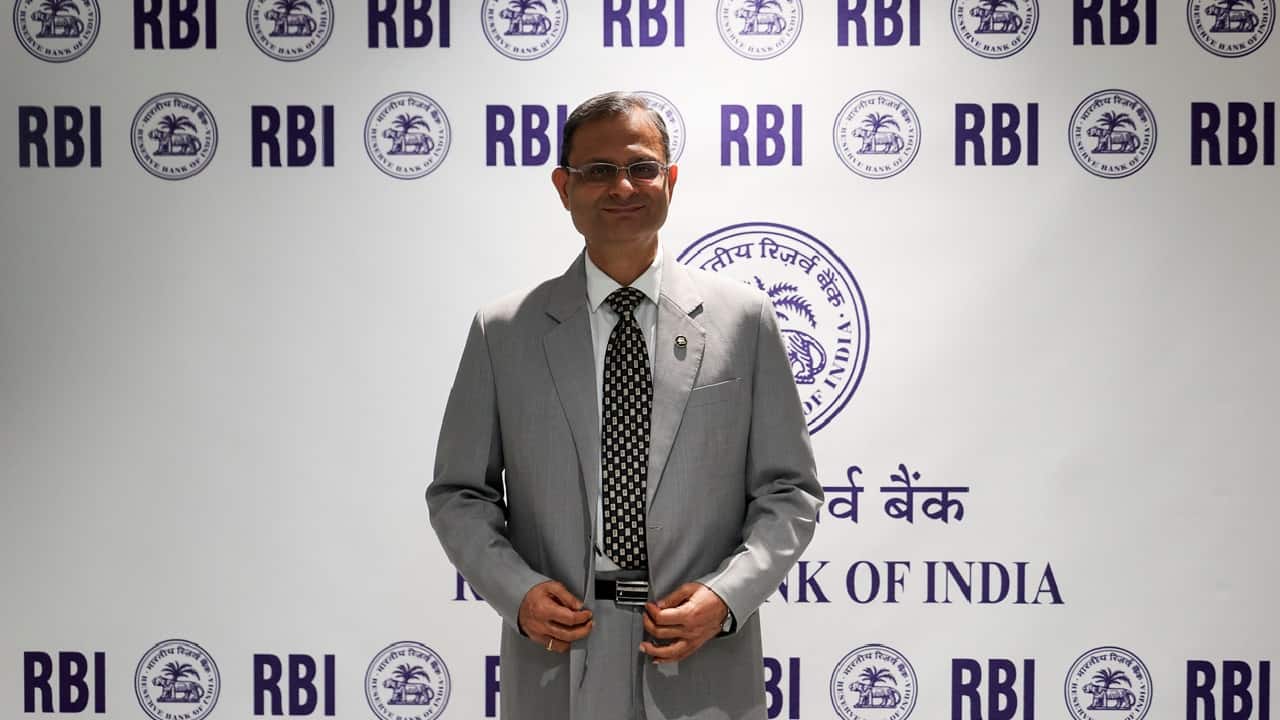
RBI governor Sanjay Malhotra outlines drivers for India’s economic growth
April 21, 2026
Addressing students at the Princeton University, Malhotra said India has grown at 6.1% a year, while the global economy grew by 3.2%, China 5.6% and Indonesia 4.2%
India’s economic growth in the last decade has been facilitated not just by core drivers such as consumption, investment, and services but also the Reserve Bank of India, governor Sanjay Malhotra.
Speaking at the Princeton University on April 18, Malhotra said India has grown at 6.1 percent a year, whereas the global economy grew by 3.2 percent and the nearest peers like China grew by 5.6 percent and Indonesia by 4.2 percent
At the heart of this is the central bank’s maintenance of price stability and adopting the Flexible Inflation Targeting (FIT) framework since 2016, which has helped bring down the average inflation to 4.7 percent in the September 2016-December 2025 period, down from 7.4 percent in previous years (April 2012-August 2016). The current inflation point target is at 4 percent, with the leeway to expand or contract by 2 percent on either side of the spectrum.
“The relatively wide tolerance band around the target allows us to navigate the supply shocks – internal as well as external, given the large weight of food and fuel (supply side factors) in the CPI basket,” Malhotra said.
On the West Asia conflict, Malhotra said the appropriate monetary policy response to such a supply shock is to look through the first-round effect to the extent that it does not feed into the second-round dynamic. Maintaining a neutral policy stance has helped preserve the flexibility to respond as the inflation-growth dynamics evolve, the RBI governor said.
“In such circumstances, our broad approach has been to be even more data dependent and to continuously 5 reassess the balance of risks. We are therefore in wait-and-watch mode now,” he said.
The government’s fiscal measures have complemented the RBI’s monetary policy stance, using supply-side interventions to effectively curb inflationary pressures. By prioritising building resilience in agriculture, strengthening warehouse supply chains and reducing the volatility in crude prices, the government has helped with its fiscal policies, Malhotra said.
Speaking at the Princeton University on April 18, Malhotra said India has grown at 6.1 percent a year, whereas the global economy grew by 3.2 percent and the nearest peers like China grew by 5.6 percent and Indonesia by 4.2 percent
At the heart of this is the central bank’s maintenance of price stability and adopting the Flexible Inflation Targeting (FIT) framework since 2016, which has helped bring down the average inflation to 4.7 percent in the September 2016-December 2025 period, down from 7.4 percent in previous years (April 2012-August 2016). The current inflation point target is at 4 percent, with the leeway to expand or contract by 2 percent on either side of the spectrum.
“The relatively wide tolerance band around the target allows us to navigate the supply shocks – internal as well as external, given the large weight of food and fuel (supply side factors) in the CPI basket,” Malhotra said.
On the West Asia conflict, Malhotra said the appropriate monetary policy response to such a supply shock is to look through the first-round effect to the extent that it does not feed into the second-round dynamic. Maintaining a neutral policy stance has helped preserve the flexibility to respond as the inflation-growth dynamics evolve, the RBI governor said.
“In such circumstances, our broad approach has been to be even more data dependent and to continuously 5 reassess the balance of risks. We are therefore in wait-and-watch mode now,” he said.
The government’s fiscal measures have complemented the RBI’s monetary policy stance, using supply-side interventions to effectively curb inflationary pressures. By prioritising building resilience in agriculture, strengthening warehouse supply chains and reducing the volatility in crude prices, the government has helped with its fiscal policies, Malhotra said.