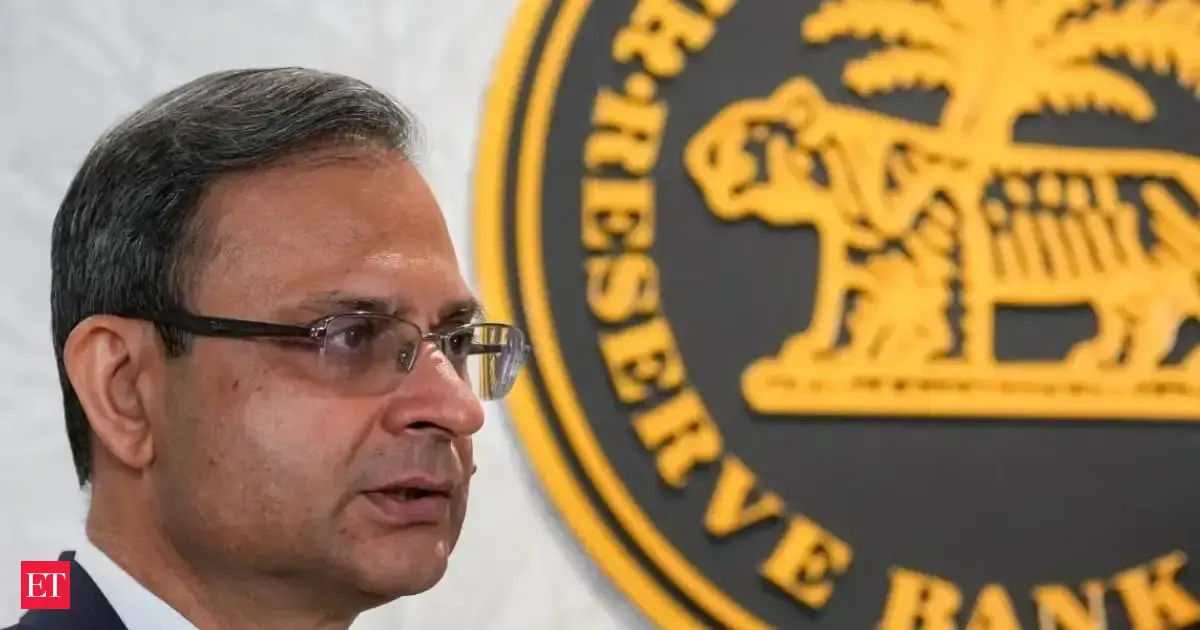
India faces inflation spillover risks from Middle East conflict: RBI
April 21, 2026
The Reserve Bank of India has issued a cautionary statement regarding escalating inflation rates. Tensions in the Middle East are causing significant disruptions in global supply chains and energy sectors, potentially embedding price volatility within the economy. Instead of slashing demand, the bank aims to guide expectations judiciously.
Synopsis
The Reserve Bank of India has issued a cautionary statement regarding escalating inflation rates. Tensions in the Middle East are causing significant disruptions in global supply chains and energy sectors, potentially embedding price volatility within the economy. Instead of slashing demand, the bank aims to guide expectations judiciously.
India’s central bank has flagged the risk of inflation becoming more entrenched as geopolitical tensions in the Middle East continue to disrupt global supply chains and energy markets.
As reported by Bloomberg, speaking at Princeton University over the weekend, Reserve Bank of India Governor Sanjay Malhotra cautioned that the longer the conflict persists, the greater the chance that initial price shocks could spill over into broader inflation across the economy.
Also Read: India's economy projected to grow at 6.4% this year: UN
“Second-round effects are the real concern,” Malhotra said in the speech, which was later published on the Reserve Bank of India website. Such effects refer to a situation where early spikes in costs -- particularly from energy -- begin feeding into wages, services, and core prices.
“What began as a supply shock can become embedded in the general price level,” he said. “Preventing this entrenchment is where monetary policy has a primary role to play.”
Live Events
The warning comes as India’s economic exposure to the Middle East remains significant. The region accounts for roughly one-sixth of the country’s exports and about one-fifth of its imports. It also supplies around half of India’s crude oil, alongside a substantial share of fertilizer imports and inward remittances — making any prolonged disruption particularly sensitive for domestic prices.
So far, India has been shielded from the kind of sharp fuel price increases seen in some other economies. State-run refiners have absorbed a portion of the cost pressures, helping to keep retail prices relatively stable. However, that buffer may not hold indefinitely. With regional elections underway and financial strain building on refiners, any eventual pass-through of higher costs to consumers could add to inflationary pressures already weighing on the economy.
Also Read: India resilient amid oil shock, may grow 6.8%-7.1% despite global headwinds: SBI Research
Malhotra suggested that the central bank’s response would focus more on managing expectations than aggressively tightening demand. The RBI would act “through its influence on inflation expectations rather than through blunt demand compression,” he said, signalling a preference to avoid sharp rate hikes that could slow growth.
For now, the central bank appears to be in no rush to act. Malhotra indicated that policymakers are adopting a cautious stance, closely tracking incoming data as the situation evolves. The RBI kept interest rates unchanged in April, choosing to assess how rising oil prices and external uncertainties play out before making further moves.
While he noted that rates are likely to remain steady in the near to medium term, Malhotra stopped short of offering firm guidance, underlining that uncertainty in global conditions could still force a shift in either direction.
(You can now subscribe to our Economic Times WhatsApp channel)
40 million SIP holders power Indian equities. What if they stop?
SpiceJet desperately hunts for lifeline, starts job cuts
Why PNG for every kitchen remains a pipe dream amid LPG crunch
Is private sector corruption free? Here's the reality...
Bold promises vs. hard proof: Indian IT faces an AI test this fiscal
Top Nifty50 stocks analysts suggest buying in this volatile week
1
2
3
The Reserve Bank of India has issued a cautionary statement regarding escalating inflation rates. Tensions in the Middle East are causing significant disruptions in global supply chains and energy sectors, potentially embedding price volatility within the economy. Instead of slashing demand, the bank aims to guide expectations judiciously.
India’s central bank has flagged the risk of inflation becoming more entrenched as geopolitical tensions in the Middle East continue to disrupt global supply chains and energy markets.
As reported by Bloomberg, speaking at Princeton University over the weekend, Reserve Bank of India Governor Sanjay Malhotra cautioned that the longer the conflict persists, the greater the chance that initial price shocks could spill over into broader inflation across the economy.
Also Read: India's economy projected to grow at 6.4% this year: UN
“Second-round effects are the real concern,” Malhotra said in the speech, which was later published on the Reserve Bank of India website. Such effects refer to a situation where early spikes in costs -- particularly from energy -- begin feeding into wages, services, and core prices.
“What began as a supply shock can become embedded in the general price level,” he said. “Preventing this entrenchment is where monetary policy has a primary role to play.”
Live Events
The warning comes as India’s economic exposure to the Middle East remains significant. The region accounts for roughly one-sixth of the country’s exports and about one-fifth of its imports. It also supplies around half of India’s crude oil, alongside a substantial share of fertilizer imports and inward remittances — making any prolonged disruption particularly sensitive for domestic prices.
So far, India has been shielded from the kind of sharp fuel price increases seen in some other economies. State-run refiners have absorbed a portion of the cost pressures, helping to keep retail prices relatively stable. However, that buffer may not hold indefinitely. With regional elections underway and financial strain building on refiners, any eventual pass-through of higher costs to consumers could add to inflationary pressures already weighing on the economy.
Also Read: India resilient amid oil shock, may grow 6.8%-7.1% despite global headwinds: SBI Research
Malhotra suggested that the central bank’s response would focus more on managing expectations than aggressively tightening demand. The RBI would act “through its influence on inflation expectations rather than through blunt demand compression,” he said, signalling a preference to avoid sharp rate hikes that could slow growth.
For now, the central bank appears to be in no rush to act. Malhotra indicated that policymakers are adopting a cautious stance, closely tracking incoming data as the situation evolves. The RBI kept interest rates unchanged in April, choosing to assess how rising oil prices and external uncertainties play out before making further moves.
While he noted that rates are likely to remain steady in the near to medium term, Malhotra stopped short of offering firm guidance, underlining that uncertainty in global conditions could still force a shift in either direction.
(You can now subscribe to our Economic Times WhatsApp channel)
40 million SIP holders power Indian equities. What if they stop?
SpiceJet desperately hunts for lifeline, starts job cuts
Why PNG for every kitchen remains a pipe dream amid LPG crunch
Is private sector corruption free? Here's the reality...
Bold promises vs. hard proof: Indian IT faces an AI test this fiscal
Top Nifty50 stocks analysts suggest buying in this volatile week
1
2
3