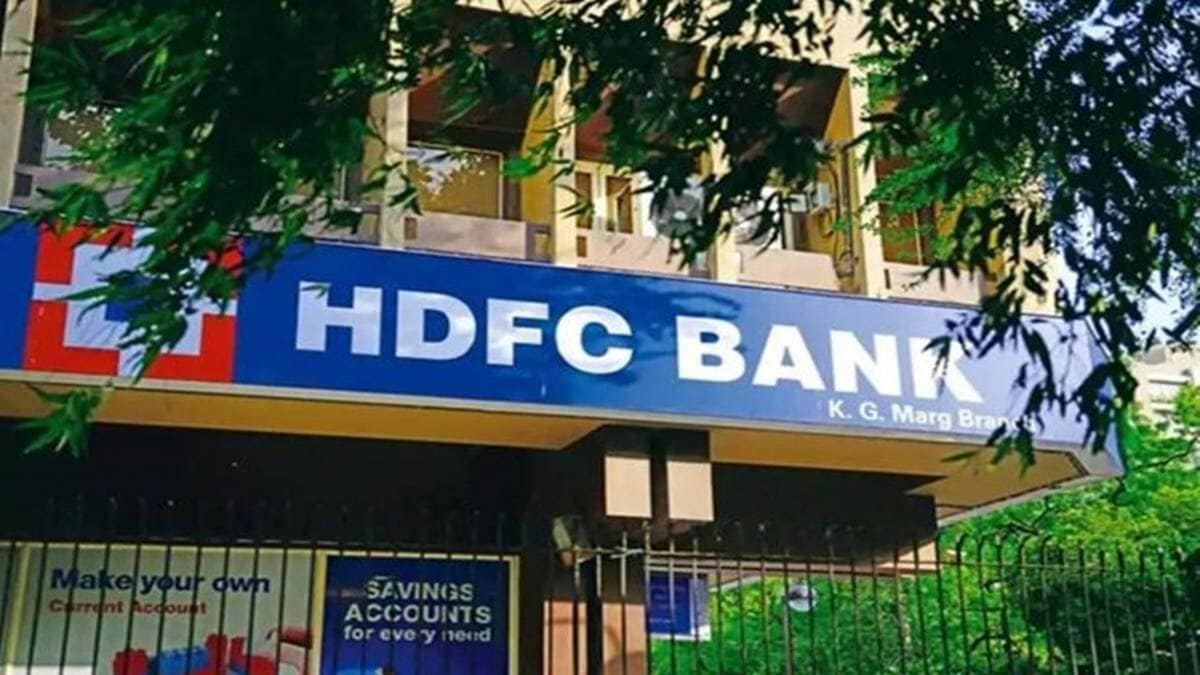
HDFC Bank ‘camouflaged’ crores as marketing spend to pay higher interest to state firm
May 27, 2026
In March, HDFC Bank chairman quit citing ethics. What bank didn’t reveal: Its probe found that violating RBI, bank’s norms, Rs 45-cr extra interest was paid to Maharashtra State Road Development Corp as sponsorship for road safety drive.
The bank’s newly appointed interim chairman, Keki Mistry, was quick to step in with a statement. “The bank has very strong ethics,” he he said on March 19. “I would never remain on the board if there were any issues with governance.” He said board members had pressed Chakraborty for details the previous day but he “did not give any specific explanation.”
The Reserve Bank of India, too, moved just as swiftly. In a press statement the same day, it declared, “Basis our periodical assessment, there are no material concern on record as regards its conduct or governance.” What went undisclosed was that, just six days earlier, on March 12, the Audit Committee of the Board (ACB), under the chairmanship of M D Ranganath, had ordered a formal “Internal Vigilance Investigation” into payments totalling Rs 45 crore made to the Maharashtra State Road Development Corporation (MSRDC), a state government agency, during FY2024 and FY2025.
This order came after an internal audit of the bank’s marketing department, covering the period 2024-25, which had flagged these payments and rated the department’s performance as “unsatisfactory.”
These payments, The Indian Express investigation, based on internal records, has revealed, were meant for MSRDC as “differential interest” i.e., interest over and above the specified rate, on its deposits. But instead of being credited directly to MSRDC’s account as interest earned, they were routed through the bank’s marketing department, disguised as contributions to a road safety awareness campaign through four local vendors.
Significantly, records reveal that this payout was approved in the presence of HDFC Bank MD & CEO Sashidhar Jagdishan during senior-level discussions where a higher rate for MSRDC was “verbally” agreed upon. Many officials have testified in the internal probe that Jagdishan “participated in the call convened to examine how the bank could compensate MSRDC and was part of the decision to provide the differential interest through the marketing budget as a one-off arrangement.”
HDFC Bank Chief Marketing Officer Ravi Santhanam acknowledged in his testimony during the Vigilance probe that the marketing department acted as a “facilitator to camouflage differential interest reimbursement as marketing spend”.
Significantly, the Vigilance probe report was sent to two top committees: Audit Committee of the Board (ACB) on April 10, and the Nomination and Remuneration Committee of the board a week later.
The RBI and HDFC Bank did not respond to detailed questionnaires sent by The Indian Express at the time of publication. MSRDC stated that its VC&MD was unavailable because of some urgent meetings.
Interviews with bank officials and scrutiny of internal documents reveal that the vigilance inquiry — conducted between March and April this year — concluded that more than 10 top officials bore responsibility. These include: MD & CEO Jagdishan; CFO Srinivasan Vaidyanathan and Chief Marketing Officer Ravi Santhanam.
The Vigilance probe’s key revelations
The vigilance report, submitted to the Audit Committee of the Board, it is learnt, lays out the sequence as follows.
In 2021, HDFC Bank approached MSRDC, a Maharashtra government infrastructure agency, seeking its savings deposits. The bank was then offering 3.5% interest on savings accounts. MSRDC, sources say, “verbally” indicated that competing financial institutions were offering 6% or higher, and said it would route deposits from a major land acquisition project — anticipated to be in the range of Rs 25,000 crore — through HDFC Bank, if it received a rate of at least 6.01%.
MSRDC also allegedly sought an upfront fee of Rs 5 crore. The bank declined this demand. But internal email correspondence reviewed by the vigilance team shows the bank instead structured a 6.01% return — folding in additional interest above 6% to effectively account for MSRDC’s expectations.
To accommodate this, the bank’s Asset Liability Committee approved a special savings bank interest rate of 4.5% — applicable to certain large deposits — in anticipation that MSRDC would bring in over Rs 10,000 crore. When only around Rs 200 crore arrived in the initial months, the 4.5% window was shut after two months, in April 2022.
This created a problem. The bank had committed to 6.01% but could no longer offer even 4.5% through normal channels. The gap between what all regular customers received (3.5%) and what MSRDC had been promised (6.01%) — a differential of 2.51 percentage points — had to be paid out somehow.
The solution allegedly devised by senior management: route the differential through the marketing department, disguised as sponsorship payments for a road safety awareness campaign run by MSRDC.
Letters formalising the arrangement were signed not by senior executives but by a junior staff member, acting on the instruction of a cluster head and — according to the vigilance report — “verbally cleared” by a zonal head.
The letters did not specify the tenure of the arrangement or any minimum balance threshold. They were, the report notes, “not vetted by legal or compliance teams” and made no mention of the 6.01% return that had been internally agreed upon. These “incomplete and poorly drafted” letters subsequently became the basis for MSRDC’s insistence on receiving differential interest payments.
MSRDC began placing funds with the bank from February 2022. Deposits never reached the anticipated scale — crossing Rs 3,000 crore for only a couple of months in 2023. From 2023 through 2025, however, HDFC Bank made a series of payments to MSRDC, aggregating to approximately Rs 45 crore, in what the vigilance report characterises as disguised interest compensation.
How crores were paid to MSRDC
The internal audit report shows how thin the cover story was.
HDFC Bank’s marketing department, the audit found, paid contributions aggregating to Rs 39.7 crore between 2023-24 and 2024-25 toward MSRDC’s “Road Safety Awareness Campaign”.
Significantly, the payments were not routed through the bank’s Corporate Social Responsibility team that usually carries out such awareness programmes. The audit said it “was not able to independently verify the accuracy, basis and rationale of the contribution made towards the campaign as no document was available reflecting the methodology of arriving at the contribution amount.”
Vendor invoices submitted as evidence of marketing activity were not properly validated. In one striking detail, a single photograph was attached across three invoices totalling around Rs 9 crore.
Payments were processed without event confirmation certificates, even though the bank’s own terms required such certificates before funds were released. There was, the audit noted, no information available to demonstrate the extent of any actual road safety awareness campaign carried out in HDFC Bank’s name.
The marketing department’s own response to the audit was unusually candid about the arrangement’s origins. It said, “This sponsorship was purely based on business consideration and arrangement/ deal was done by the business team (Retail Branch Banking) with MSRDC basis banker customer relationship. Hence, it came to marketing for processing the payment and an additional budget was provided for this purpose by the finance department, over and above the regular marketing budget.”
In other words, the bank’s marketing team acknowledged it had been handed a pre-arranged deal and told to process it — with extra budget allocated by finance for the purpose.
Banking norms that were violated, breached
The vigilance report, according to sources, identifies a cluster of serious regulatory and governance breaches.
Most significantly, it flags a violation of the RBI’s Master Directions on interest rates on deposits, which explicitly prohibit banks from offering negotiated returns to individual depositors. By routing the differential interest to MSRDC through vendor payments, effectively compensating a customer at a rate unavailable to others, the bank is alleged to have done what the regulation forbids.
The report also flags a violation of the bank’s own anti-bribery and anti-corruption policy. The policy prohibits payments that could constitute “improper inducement”. Routing interest payments through vendors in the form of marketing expenses, the report holds, falls squarely within that prohibition.
A top source familiar with the inquiry said, “Not only is this a violation of the Banking Regulation Act, it also raises questions of ethics. Banks cannot give a negotiated rate to any one customer and cannot incentivise customers for keeping deposits beyond a certain limit.”
The source said that because payments were routed through vendors rather than credited directly to MSRDC as interest payment, the vendors would have raised invoices and claimed input tax credit — creating an additional layer of irregularity.
Who bears responsibility?
The vigilance report, sources say, goes beyond structural lapses and obtained and assessed statements from several key officials.
CMO Santhanam acknowledged in his testimony that the “marketing department acted as the facilitator to camouflage differential interest reimbursement as marketing spend.”
He further said that “a small portion was spent on actual marketing to support the vendor invoices and to give the payments an appearance of legitimate marketing activity.” He described the mechanism as a “one-off case.”
On the MD & CEO, Sashidhar Jagdishan, the report’s findings are more pointed. Jagdishan, it said, was involved in senior-level discussions where the overall 6.01% return structure for MSRDC was verbally agreed upon — without any written approval or documentation.
The report concludes that while the method effectively reimbursed MSRDC for an interest shortfall on savings deposits, it “fell outside the bank’s approved governance, resulting in regulatory breach” — and that this “exposed the bank to regulatory, operational and reputational risks.”
CFO Srinivasan Vaidyanathan faces similar findings. Multiple staff members testified he was present at the call where senior management explored how to compensate MSRDC, and that he was specifically tasked with determining how the remaining interest differential could be reimbursed through the marketing route.
The report said the CFO did not ensure the arrangement was formally recorded, reviewed by compliance or audit, or subjected to any internal control — and that “no written process” existed for it.
The conclusion, the vigilance report said: “It is established that the CFO was present at the inception of the arrangement and approved the reimbursement modality through marketing.”
The Reserve Bank of India, too, moved just as swiftly. In a press statement the same day, it declared, “Basis our periodical assessment, there are no material concern on record as regards its conduct or governance.” What went undisclosed was that, just six days earlier, on March 12, the Audit Committee of the Board (ACB), under the chairmanship of M D Ranganath, had ordered a formal “Internal Vigilance Investigation” into payments totalling Rs 45 crore made to the Maharashtra State Road Development Corporation (MSRDC), a state government agency, during FY2024 and FY2025.
This order came after an internal audit of the bank’s marketing department, covering the period 2024-25, which had flagged these payments and rated the department’s performance as “unsatisfactory.”
These payments, The Indian Express investigation, based on internal records, has revealed, were meant for MSRDC as “differential interest” i.e., interest over and above the specified rate, on its deposits. But instead of being credited directly to MSRDC’s account as interest earned, they were routed through the bank’s marketing department, disguised as contributions to a road safety awareness campaign through four local vendors.
Significantly, records reveal that this payout was approved in the presence of HDFC Bank MD & CEO Sashidhar Jagdishan during senior-level discussions where a higher rate for MSRDC was “verbally” agreed upon. Many officials have testified in the internal probe that Jagdishan “participated in the call convened to examine how the bank could compensate MSRDC and was part of the decision to provide the differential interest through the marketing budget as a one-off arrangement.”
HDFC Bank Chief Marketing Officer Ravi Santhanam acknowledged in his testimony during the Vigilance probe that the marketing department acted as a “facilitator to camouflage differential interest reimbursement as marketing spend”.
Significantly, the Vigilance probe report was sent to two top committees: Audit Committee of the Board (ACB) on April 10, and the Nomination and Remuneration Committee of the board a week later.
The RBI and HDFC Bank did not respond to detailed questionnaires sent by The Indian Express at the time of publication. MSRDC stated that its VC&MD was unavailable because of some urgent meetings.
Interviews with bank officials and scrutiny of internal documents reveal that the vigilance inquiry — conducted between March and April this year — concluded that more than 10 top officials bore responsibility. These include: MD & CEO Jagdishan; CFO Srinivasan Vaidyanathan and Chief Marketing Officer Ravi Santhanam.
The Vigilance probe’s key revelations
The vigilance report, submitted to the Audit Committee of the Board, it is learnt, lays out the sequence as follows.
In 2021, HDFC Bank approached MSRDC, a Maharashtra government infrastructure agency, seeking its savings deposits. The bank was then offering 3.5% interest on savings accounts. MSRDC, sources say, “verbally” indicated that competing financial institutions were offering 6% or higher, and said it would route deposits from a major land acquisition project — anticipated to be in the range of Rs 25,000 crore — through HDFC Bank, if it received a rate of at least 6.01%.
MSRDC also allegedly sought an upfront fee of Rs 5 crore. The bank declined this demand. But internal email correspondence reviewed by the vigilance team shows the bank instead structured a 6.01% return — folding in additional interest above 6% to effectively account for MSRDC’s expectations.
To accommodate this, the bank’s Asset Liability Committee approved a special savings bank interest rate of 4.5% — applicable to certain large deposits — in anticipation that MSRDC would bring in over Rs 10,000 crore. When only around Rs 200 crore arrived in the initial months, the 4.5% window was shut after two months, in April 2022.
This created a problem. The bank had committed to 6.01% but could no longer offer even 4.5% through normal channels. The gap between what all regular customers received (3.5%) and what MSRDC had been promised (6.01%) — a differential of 2.51 percentage points — had to be paid out somehow.
The solution allegedly devised by senior management: route the differential through the marketing department, disguised as sponsorship payments for a road safety awareness campaign run by MSRDC.
Letters formalising the arrangement were signed not by senior executives but by a junior staff member, acting on the instruction of a cluster head and — according to the vigilance report — “verbally cleared” by a zonal head.
The letters did not specify the tenure of the arrangement or any minimum balance threshold. They were, the report notes, “not vetted by legal or compliance teams” and made no mention of the 6.01% return that had been internally agreed upon. These “incomplete and poorly drafted” letters subsequently became the basis for MSRDC’s insistence on receiving differential interest payments.
MSRDC began placing funds with the bank from February 2022. Deposits never reached the anticipated scale — crossing Rs 3,000 crore for only a couple of months in 2023. From 2023 through 2025, however, HDFC Bank made a series of payments to MSRDC, aggregating to approximately Rs 45 crore, in what the vigilance report characterises as disguised interest compensation.
How crores were paid to MSRDC
The internal audit report shows how thin the cover story was.
HDFC Bank’s marketing department, the audit found, paid contributions aggregating to Rs 39.7 crore between 2023-24 and 2024-25 toward MSRDC’s “Road Safety Awareness Campaign”.
Significantly, the payments were not routed through the bank’s Corporate Social Responsibility team that usually carries out such awareness programmes. The audit said it “was not able to independently verify the accuracy, basis and rationale of the contribution made towards the campaign as no document was available reflecting the methodology of arriving at the contribution amount.”
Vendor invoices submitted as evidence of marketing activity were not properly validated. In one striking detail, a single photograph was attached across three invoices totalling around Rs 9 crore.
Payments were processed without event confirmation certificates, even though the bank’s own terms required such certificates before funds were released. There was, the audit noted, no information available to demonstrate the extent of any actual road safety awareness campaign carried out in HDFC Bank’s name.
The marketing department’s own response to the audit was unusually candid about the arrangement’s origins. It said, “This sponsorship was purely based on business consideration and arrangement/ deal was done by the business team (Retail Branch Banking) with MSRDC basis banker customer relationship. Hence, it came to marketing for processing the payment and an additional budget was provided for this purpose by the finance department, over and above the regular marketing budget.”
In other words, the bank’s marketing team acknowledged it had been handed a pre-arranged deal and told to process it — with extra budget allocated by finance for the purpose.
Banking norms that were violated, breached
The vigilance report, according to sources, identifies a cluster of serious regulatory and governance breaches.
Most significantly, it flags a violation of the RBI’s Master Directions on interest rates on deposits, which explicitly prohibit banks from offering negotiated returns to individual depositors. By routing the differential interest to MSRDC through vendor payments, effectively compensating a customer at a rate unavailable to others, the bank is alleged to have done what the regulation forbids.
The report also flags a violation of the bank’s own anti-bribery and anti-corruption policy. The policy prohibits payments that could constitute “improper inducement”. Routing interest payments through vendors in the form of marketing expenses, the report holds, falls squarely within that prohibition.
A top source familiar with the inquiry said, “Not only is this a violation of the Banking Regulation Act, it also raises questions of ethics. Banks cannot give a negotiated rate to any one customer and cannot incentivise customers for keeping deposits beyond a certain limit.”
The source said that because payments were routed through vendors rather than credited directly to MSRDC as interest payment, the vendors would have raised invoices and claimed input tax credit — creating an additional layer of irregularity.
Who bears responsibility?
The vigilance report, sources say, goes beyond structural lapses and obtained and assessed statements from several key officials.
CMO Santhanam acknowledged in his testimony that the “marketing department acted as the facilitator to camouflage differential interest reimbursement as marketing spend.”
He further said that “a small portion was spent on actual marketing to support the vendor invoices and to give the payments an appearance of legitimate marketing activity.” He described the mechanism as a “one-off case.”
On the MD & CEO, Sashidhar Jagdishan, the report’s findings are more pointed. Jagdishan, it said, was involved in senior-level discussions where the overall 6.01% return structure for MSRDC was verbally agreed upon — without any written approval or documentation.
The report concludes that while the method effectively reimbursed MSRDC for an interest shortfall on savings deposits, it “fell outside the bank’s approved governance, resulting in regulatory breach” — and that this “exposed the bank to regulatory, operational and reputational risks.”
CFO Srinivasan Vaidyanathan faces similar findings. Multiple staff members testified he was present at the call where senior management explored how to compensate MSRDC, and that he was specifically tasked with determining how the remaining interest differential could be reimbursed through the marketing route.
The report said the CFO did not ensure the arrangement was formally recorded, reviewed by compliance or audit, or subjected to any internal control — and that “no written process” existed for it.
The conclusion, the vigilance report said: “It is established that the CFO was present at the inception of the arrangement and approved the reimbursement modality through marketing.”